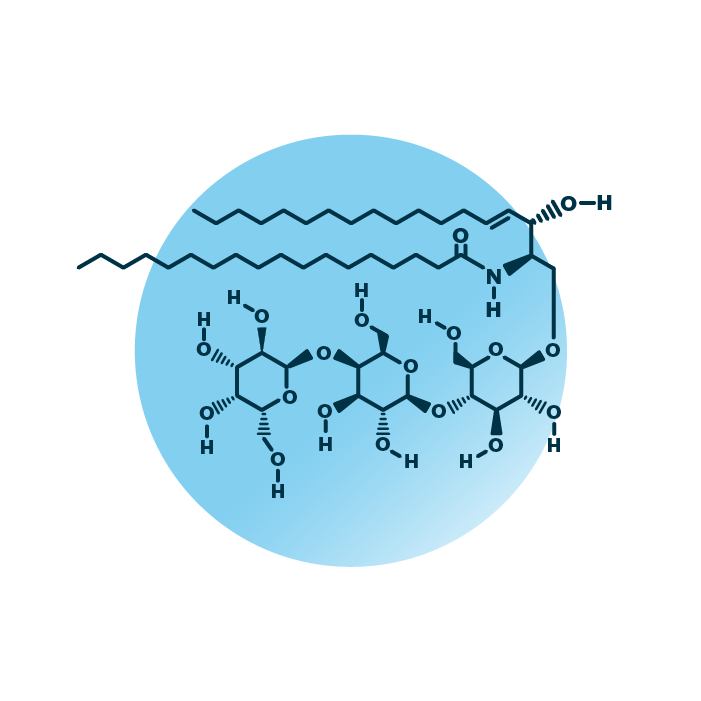
About the structure and biological function of Gb3
What is the structure of Gb3 Globoside?
Gb3 globoside lipids (globo-triaosylceramides, ceramide trihexosides, or antigen CD77) belong to the group of globosides within the sphingolipids. Their structure consists of a ceramide backbone linked to a neutral oligosaccharide unit made of three sugar molecules. The ceramide backbone contains two hydrocarbon chains: a long-chain base which is linked to a fatty acid via an amide bond. The fatty acid and the long-chain base can be of variable length, hydroxylated, and contain double bonds.
What is the function of Gb3 Globoside?
Gb3 globosides specifically interact with the cellular “death receptor” FasR. When paired to a Gb3, FasR transduces a cell death signal derived from activation of the caspase-8 cascade. A genetic defect in the enzyme alpha-galactosidase leads to accumulation of Gb3, causing Fabry’s disease, a lysosomal storage disease. Further, Gb3 are a component of the cell membrane where they bind to Shigatoxins facilitating their entry into cells.