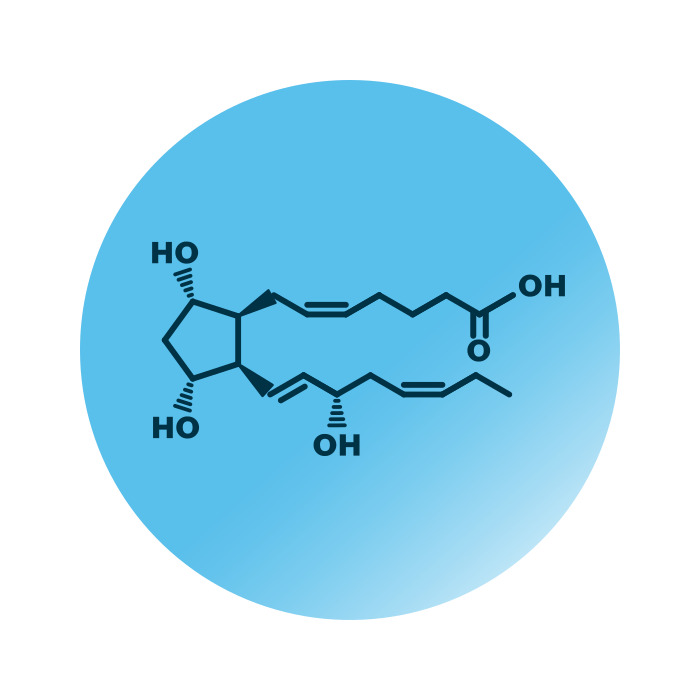
About the structure and biological function of IsoP
Structure. Isoprostanes (IsoP) belong to the group of eicosanoids within the fatty acyls. Their structure is based on eicosanoic acid, a twenty carbon atoms long hydrocarbon chain with a carboxyl group. The chain contains one five-membered ring, which features further substituents. Most IsoP lipids contain a hydroxy group which defines their structure. The hydrocarbon chain of isoprostanes can encompass further double bonds and oxygen containing substituents.
Function. The biological functions of isoprostanes are mainly associated with oxidative stress. IsoP lipids are mainly released from phospholipids affected by oxidative stress before they exert their physiological role and modify inflammatory responses. As oxidative stress has also been linked to cancer, cardiovascular, metabolic, and neurological diseases, non-invasive measurement of isoprostane markers has been coined as the ‘gold standard’ by which oxidative damage and stress can be determined.