About the structure and biological function of GD3
What is the structure of GD3 Ganglioside?
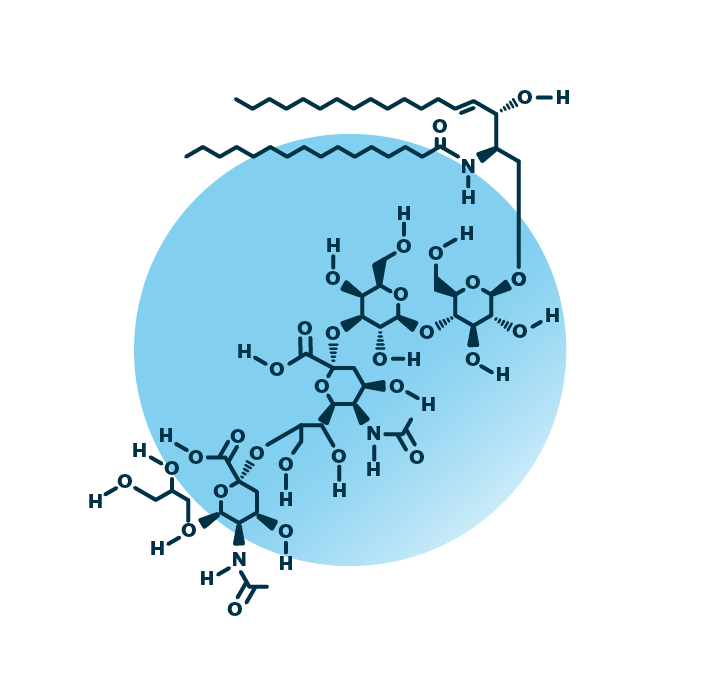
GD3 ganglioside lipids belong to the group of gangliosides within the sphingolipids. Their structure consists of a ceramide backbone linked to an oligosaccharide unit made of four sugar molecules. Two of them are sialic acid. The ceramide backbone contains two hydrocarbon chains: a long-chain base which is linked to a fatty acid via an amide bond. The fatty acid and the long-chain base can be of variable length, hydroxylated, and contain double bonds.
What is the function of GD3 Ganglioside?
GD3 gangliosides are fundamental in neurogenesis. They bind to the EGF receptor resulting in the activation of a signaling cascade promoting cell proliferation. This is essential for stem cell self-renewal in the brain. GD3 lipids are critical for apoptosis and autophagy, programmed cell death and cellular “self-eating”. They also serve as precursors of more complex gangliosides. Further, GD3 levels are elevated in melanomas and neuroblastomas, and they are the main gangliosides in early human breast milk.